


Carbon Neutrality

Approach
In aiming to contribute to a sustainable society, the Otsuka group is working to reduce greenhouse gas (GHG) emissions throughout the supply chain in line with the international targets and indicators adopted under the Paris Agreement.
Carbon Neutrality
Targets and results
| Targets |
(2028 Targets)
|
|---|---|
| 2024 Results | Scope 1, 2: 60% reduction Self-generated renewable energy: 2% |
CO2 reduction initiatives ~ Introduction of Renewable Energy ~
Introduction of renewable energy facilities
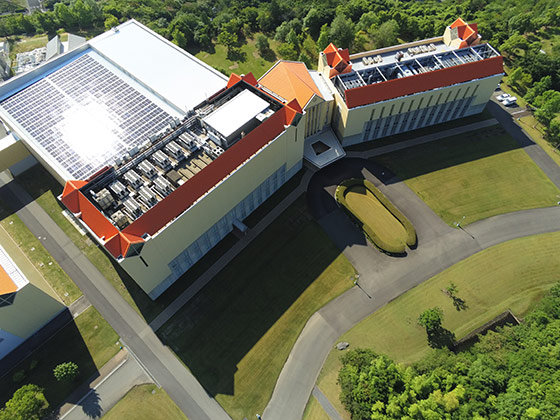
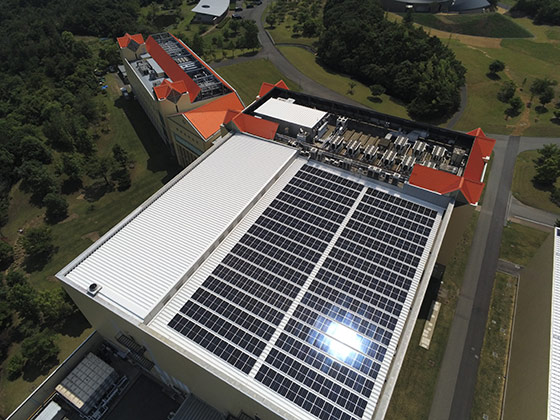
Otsuka Pharmaceutical is advancing use of renewable energy through the installation of solar power generation systems, expanding use at domestic plants since 2021.
Operations at six factories: Tokushima Itano Factory, Takasaki Factory, Tokushima Factory, Tokushima Mima Factory, Tokushima No. 2 Factory, and Tokushima Wajiki Factory, commenced sequentially between September 2024 and December 2025. As a result, the annual reduction in CO2 emissions from these solar power systems is expected to reach approximately 3,189 tons*1 across the six domestic factories.
The company has already transitioned 84% of electricity consumption in Japan to renewable energy through the use of CO2-free electricity and other sources. This initiative to generate renewable energy in-house directly contributes to decarbonization.
- *1CO2 reduction compared to conventional electricity usage
100% renewable energy achieved for purchased electricity

At Otsuka Pharmaceutical, the share of renewable energy in electricity purchased from external sources has reached 100% across all business sites through the use of CO2-free electricity and green power certificates. In 2024, this resulted in a reduction of approximately 45,500 tons of CO2 emissions.
CO2 reduction initiatives: Modal shift
Otsuka Pharmaceutical has been collaborating with Taiho Pharmaceutical since May 2024 on a material-recycling initiative for blister/bubble pack waste generated during the packaging of pharmaceutical products.
This initiative utilizes technology to separate blister/bubble pack sheets, used for packaging tablets and capsules, into the plastic and aluminum foil components . In addition, by adopting a modal shift to rail transport, which emits lower CO2, annual CO2 emissions have been reduced by approximately 140 tons.
Engagement with international initiatives
Support for the RE100 Renewal Energy Initiative

The Otsuka group supports RE100, an international initiative that aims to have companies source 100% of their electricity from renewable energy. The group joined the initiative in April 2022.
Commitment letter to obtain Science-Based Targets validation for the entire Otsuka group of companies was submitted
In January 2026, Otsuka group submitted a letter of commitment*2 to SBTi*3, the certification body for Science-Based Targets (SBT), which are greenhouse gas emission reduction targets based on the Paris Agreement, and announced its intention to aim for SBT certification.
By setting targets for the entire Otsuka group, we will accelerate efforts across the entire group.
- *2A Commitment Letter signifies a company's pledge to set targets aligned with SBT standards and apply to SBTi within two years.
- *3A corporate climate initiative which was initially founded as a collaboration between CDP, United Nations Global Compact (UNGC), We Mean Business Coalition, World Resources Institute (WRI), and World Wide Fund for Nature (WWF). It validates whether corporate GHG emission reduction targets are consistent with scientific knowledge to achieve the Paris Agreement's goal of holding the increase in the global average temperature to well below 2°C above pre-industrial levels and pursue efforts to limit the temperature increase to 1.5°C above pre-industrial levels.
Find out more about our environmental data